

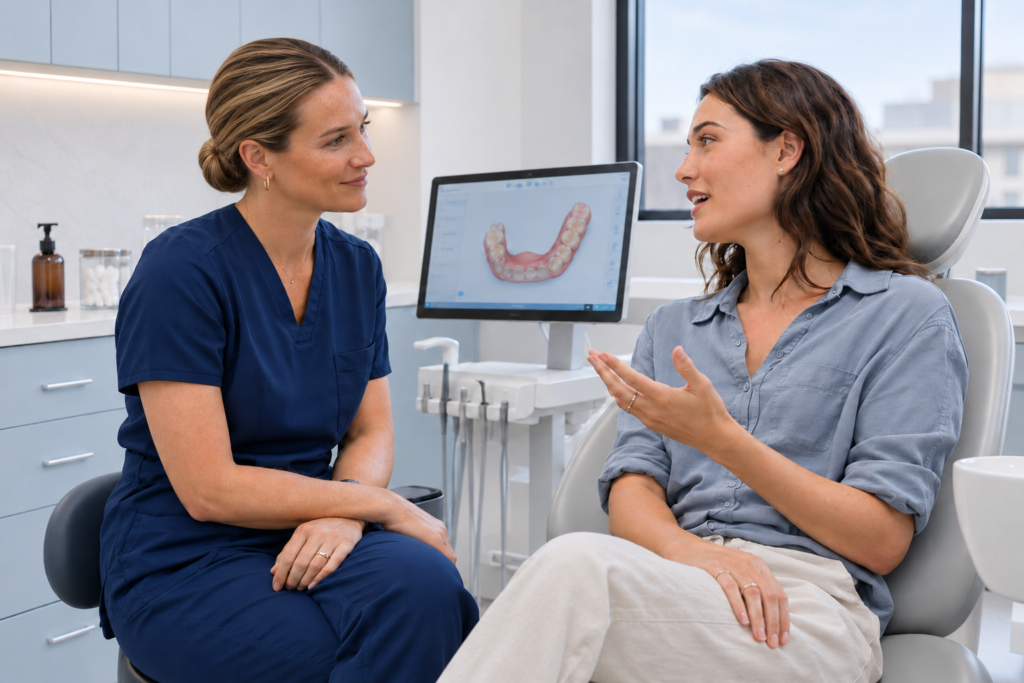
Technology is changing dentistry in meaningful ways. Digital imaging can help dentists identify problems earlier. Intraoral scanners can make impressions more comfortable, and modern planning tools can support precise, personalised treatment. AI can also help clinicians analyse images and organise information, supporting their professional judgement and treatment planning. These advances can improve care, but the most effective dentistry still depends on trust, listening and human connection.
The challenge is to use technology in a way that makes patients feel more cared for, not less.
Let Technology Support the Conversation
For many patients, a dental appointment can bring anxiety or uncertainty. New equipment may look unfamiliar, and clinical explanations can feel overwhelming. Dentists can make technology less intimidating by showing patients what a scan or image reveals and explaining how it informs their options.
Digital images help a patient understand a diagnosis. But the image alone cannot answer what matters most to them: What does this mean for my health? What choices do I have? Will treatment be uncomfortable?
This is where a caring dental professional comes in.
Making Care Personal
Every patient arrives with concerns and comfort levels. Some may welcome detailed explanations and visual tools. Others may prefer some reassurance or a moment to ask questions before treatment begins.
A nurturing approach means noticing those differences and adapting. It means asking about a patient’s concerns, checking that they understand their choices and respecting their preferences.
For Dr Rita Trak, owner of Dental + Skin Clinic in Bentleigh East, VIC, “nurturing dentistry means looking at the whole person, not just the tooth in front of me. A person’s smile can be an important part of their confidence and how they feel about themselves. So before we talk about treatment, I want to understand what’s worrying them and what they hope to achieve.
Technology helps me explain what I’m seeing and support treatment planning. But it’s the conversation that makes the difference. I explain things in plain language, let patients set the pace and make sure they never feel rushed or judged, whether they’re a nervous child or an adult who hasn’t visited in years.
When people feel heard and understood, they can feel more comfortable and confident in their care. That’s what I think good dentistry should feel like.”
Use Innovation to Reduce Stress
When thoughtfully introduced, new tools can make dental visits more comfortable and efficient. Digital workflows may reduce the need for uncomfortable impressions, while clearer imaging can help patients see what their dentist sees and better understand their oral health. Digital treatment planning can also help the dental team prepare carefully and explain the steps involved, making care feel more predictable.
Technology can streamline routine tasks, improve communication between team members and give patients a clearer view of their options. When patients understand what is happening and why, they can feel more confident and involved in decisions about their care.
But convenience should not come at the cost of a patient feeling rushed. A smooth appointment is valuable only if the patient also feels heard, informed and safe.
The measure of useful technology is not simply how advanced it is. It is whether it helps the dental team deliver care that is clearer, gentler and better suited to the person in the chair.
Protect the Human Side of Dentistry
Dentistry involves technical skill, but it is also a relationship built over time. Patients may share worries about pain, cost, appearance or past experiences. Responding with patience and compassion can help them feel comfortable returning for routine care and seeking help when they need it.
No device can replace a calm explanation, a reassuring check-in or the feeling that someone is paying attention. These gestures may seem small, but they can shape a patient’s experience as much as the treatment itself.
A Thoughtful Balance
The future of dentistry does not require choosing between modern tools and personal care. The strongest approach brings them together: technology to improve understanding and precision, and a nurturing team to guide patients through decisions with empathy and respect.
When innovation serves the dentist-patient relationship, it becomes part of care that is both clinically considered and human.

Bring Technology and Nurturing Care Together
The right technology can make dental care clearer, more comfortable and more precise. But a positive patient experience still starts with listening, empathy and trust.
Explore how thoughtful technology and a nurturing approach can work together to support better dental care.
